

St. James Gate Iced Coffee

St James Gate Cocktail

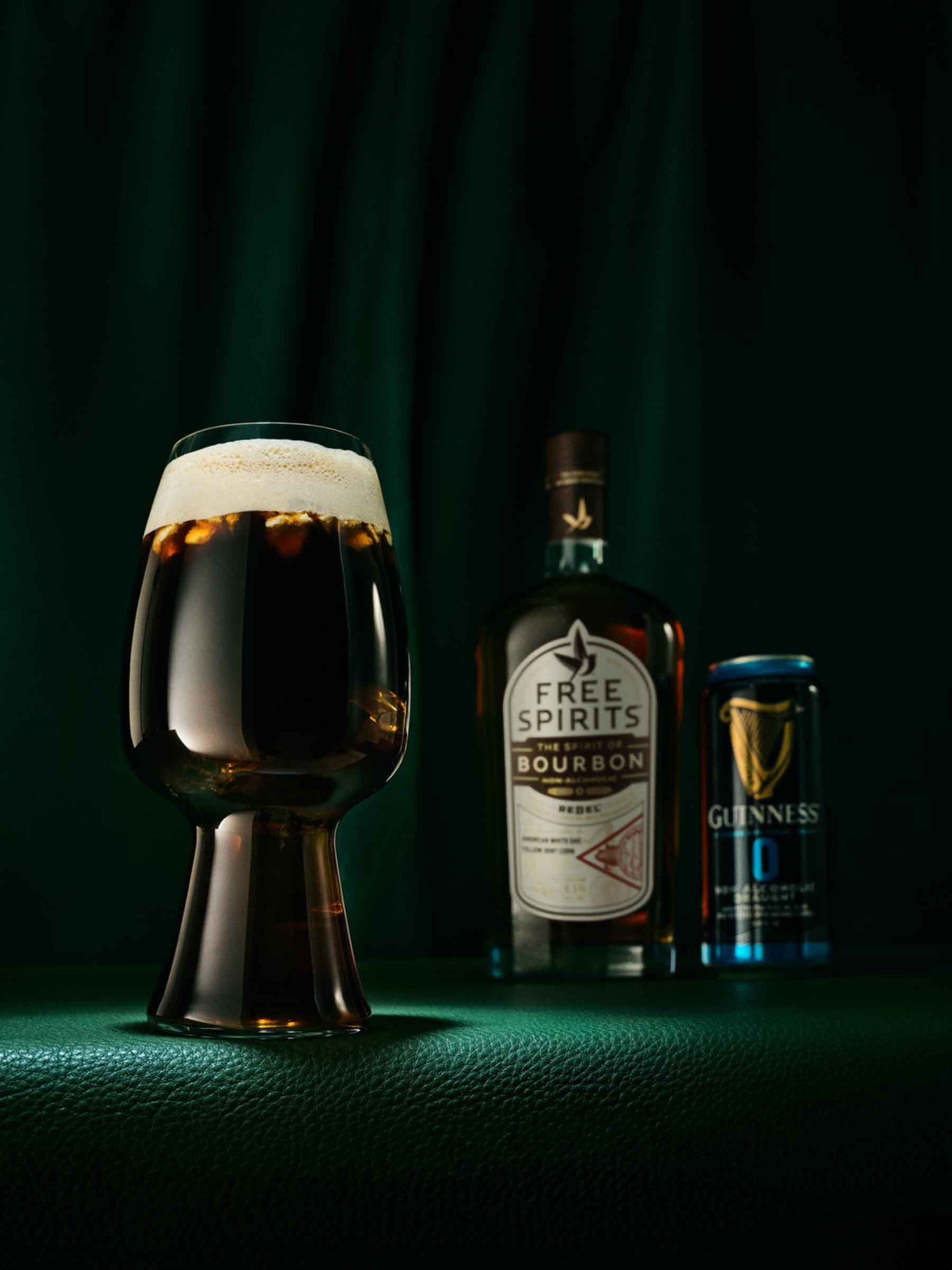
It may look like a classic, but there's a complex cocktail in this glass. The St. James Gate Iced Coffee takes the familiar idea of Irish Coffee and flips it on its head, serving up an icy zero-proof version that leans into the darker side of the flavor spectrum.

Cold brew provides the backbone, while The Spirit of Bourbon steps in for the whiskey role. Brown sugar syrup adds a deeper, molasses-tinged sweetness, and a few dashes of chocolate bitters bring just enough cocoa and spice to keep things interesting. Then comes Guinness 0, adding roasted stout character that feels right at home alongside the coffee.

The result lands somewhere between cocktail and iced coffee, with a quiet nod to Dublin’s stout tradition and the coffee-and-whiskey lineage that inspired it in the first place.

star

Why This Works

Structurally, the drink still follows the familiar Irish Coffee framework: spirit, coffee, sugar, and cream.

Cold brew provides concentrated coffee flavor without the sharper acidity of hot coffee, giving the drink a smooth base for shaking. The Spirit of Bourbon brings vanilla and oak notes that naturally complement roasted coffee and chocolate.

Brown sugar syrup reinforces the darker side of the flavor spectrum, while chocolate mole bitters bridge the gap between coffee, stout, and cream. The final float of Guinness 0 adds roasted malt bitterness and a creamy texture that keeps the drink from tipping too sweet, while tying the entire drink back to its stout inspiration.

About Free Spirits: The Spirit of Bourbon

The Spirit of Bourbon mirrors the complexity and structure of classic Kentucky bourbon, crafted with real American oak and natural extracts to deliver warm spice, vanilla, and char with a sweetness an aged bourbon is known for. It brings the heft bourbon cocktails demand: enough body to stand up to bitters, the precision stirred drinks require, and the balance to carry citrus in Sours and Gold Rushes. It holds its ground alongside bold ingredients like ginger, honey, and aromatic bitters, and delivers consistent backbone in Old Fashioneds, Manhattans, Boulevardiers, and any cocktail calling for whiskey with character and restraint.

St. James’s Gate

St. James’s Gate in Dublin is one of the most recognizable brewing addresses in the world. Since Arthur Guinness signed the brewery’s famous 9,000-year lease there in 1759, the name has become inseparable from the stout itself. For many drinkers, mentioning the gate is simply another way of invoking Guinness.

That association makes the name feel at home in a drink built around coffee and whiskey. Irish Coffee has long tied those flavors together, and stout naturally lives in the same roasted spectrum. Guinness in particular carries the kind of coffee-and-cocoa character that has inspired bartenders to fold it into cocktails, desserts, and coffee drinks for decades.

Referencing St. James’s Gate here is less about geography and more about lineage. The drink nods toward Dublin’s stout tradition while reworking the familiar coffee-and-whiskey formula in a colder, darker direction.

Zero-Proof Cocktail Basics

What is a zero-proof cocktail?

A zero-proof cocktail is a fully built drink that follows the same principles as any classic: acid, sweetness, aromatics, dilution, and a defined base spirit. The difference is the base is non-alcoholic. When that spirit has enough structure and character, like the ones we make, you get a cocktail that drinks like a cocktail, not a compromise.

How do non-alcoholic spirits work in classic cocktail recipes?

Non-alcoholic spirits step into the role of the base spirit. They carry citrus, sugar, bitters, and dilution the same way their alcoholic counterparts do. Some recipes need small ratio adjustments, but the technique stays the same: build the drink, balance the elements, and let the base spirit define the profile.

Do zero-proof cocktails taste like the originals?

They taste like cocktails: recognizable, structured, and intentional. The goal isn't imitation; it's integrity. When the build is balanced and the spirit has presence, you get the character of the drink without relying on alcohol to do the work.

Can zero-proof cocktails have real complexity?

Yes. Complexity comes from design, not ethanol. A well-built zero-proof cocktail shows layers: aromatics, texture, finish. The craft sits in the composition, not the ABV. The right non-alcoholic spirit brings the structure; the ingredients do the rest.

What is the difference between zero-proof and low-proof cocktails?

Zero-proof cocktails contain no alcohol. Low-proof cocktails blend traditional spirits with non-alcoholic spirits to dial down the ABV while keeping the drink's identity intact. It's the easiest way to keep the ritual, cut the intensity, and stay in full control of the experience.

Why does Free Spirits work so well in both zero-proof and low-proof cocktails?

The Spirit of Bourbon is built with oak-forward depth and enough body to hold bitters and sweetness in balance. Whether you use it as the sole base or split it with traditional bourbon, it behaves like a true cocktail foundation, keeping the drink structured, complex, and true to form.