

The Koji Sour

The Koji Sour

The Koji Sour takes the familiar Whiskey Sour in a more complex direction with one small addition: white miso.

The Spirit of Bourbon brings oak, vanilla, and spice, while lemon and demerara provide the classic sweet-sour structure. A half teaspoon of white miso adds salinity, umami, and depth, giving the cocktail a fuller, more rounded character without making it taste overtly of miso.

It is a subtle addition, but that is precisely the point.

The Koji Sour (Non-Alcoholic)

The Free Spirits Company

Category

Non-Alcoholic Cocktails

The Koji Sour takes the familiar Whiskey Sour in a more complex direction with one small addition: white miso.

The Spirit of Bourbon brings oak, vanilla, and spice, while lemon and demerara provide the classic sweet-sour structure. A half teaspoon of white miso adds salinity, umami, and depth, giving the cocktail a fuller, more rounded character without making it taste overtly of miso.

It is a subtle addition, but that is precisely the point.
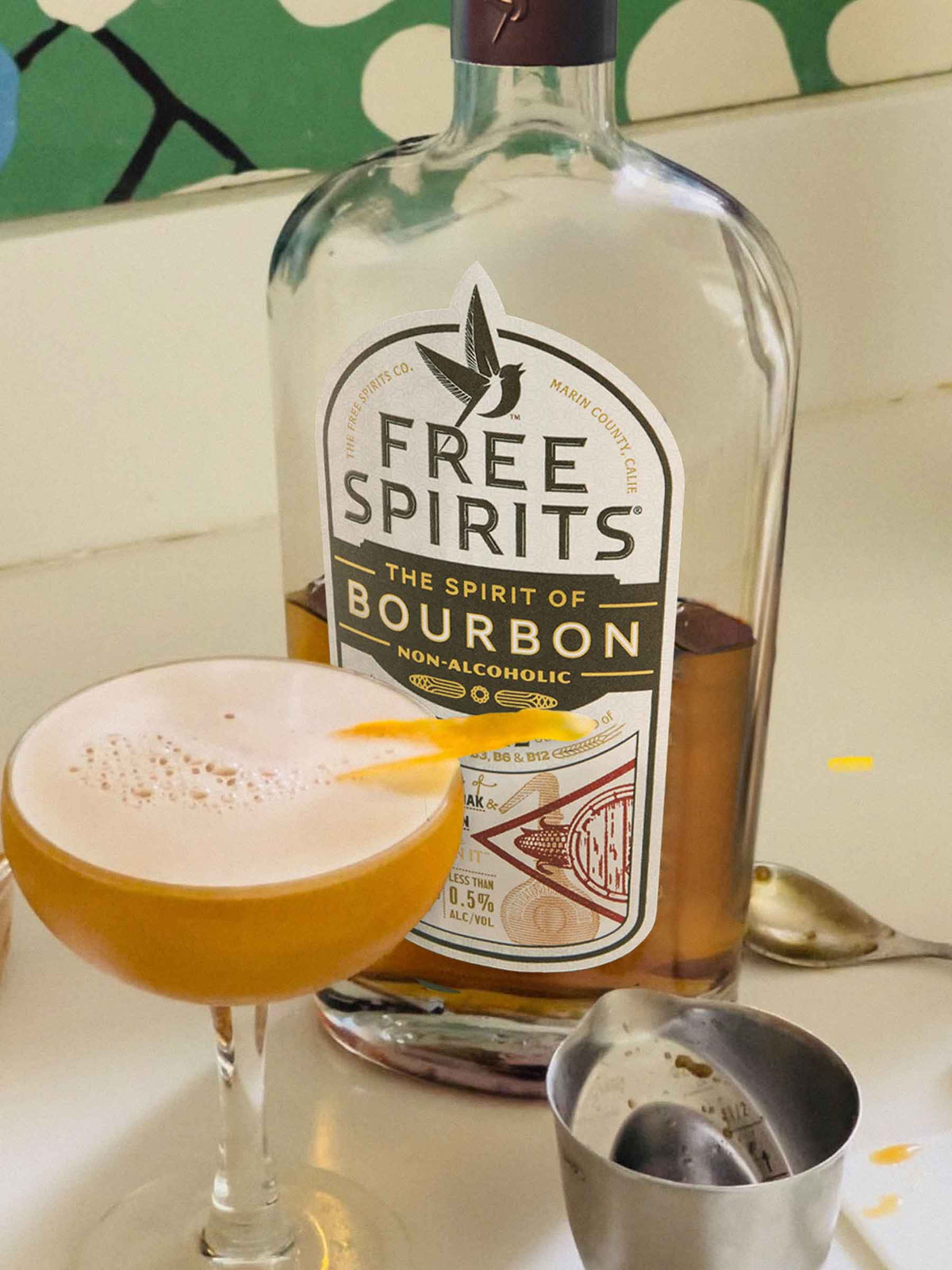
The Koji Sour (Non-Alcoholic)

Ingredients

  • 2 ½ oz The Spirit of Bourbon
  • 1 oz fresh lemon juice

  • ¾ oz demerara syrup*
  • ½ tsp white miso paste

  • Lemon peel, for garnish

Method

  1. Add the white miso and demerara syrup to a cocktail shaker and stir until the miso is completely dissolved.

  2. Add The Spirit of Bourbon and fresh lemon juice, then dry shake vigorously for 15 seconds.

  3. Add ice and shake briefly until chilled.

  4. Double strain into a chilled coupe.

  5. Express a lemon peel over the cocktail and garnish.

blank

  1. Heat 2 tablespoons of water with a quarter cup of demerara (or turbinado) sugar in a saucepan until it's dissolved

  2. Remove from heat and allow to cool

  3. Refrigerate for up to 2 weeks.

Why This Works

The Spirit of Bourbon gives the Koji Sour its foundation of oak, vanilla, caramel, and spice, with enough depth to stand up to both fresh lemon and the concentrated character of miso.

White miso is the key. Its salinity and umami deepen the bourbon notes and temper the sharper edges of the citrus, while demerara syrup brings richness and rounds out the acidity. Used sparingly, the miso never takes over. Instead, it makes the familiar sweet, sour, and spirit-driven structure of a Whiskey Sour taste more layered and complete.

The Koji Sour

About Free Spirits

The Spirit of Bourbon

The Spirit of Bourbon mirrors the complexity and structure of classic Kentucky bourbon, crafted with real American oak and natural extracts to deliver warm spice, vanilla, and char with a sweetness an aged bourbon is known for.

It brings the heft bourbon cocktails demand: enough body to stand up to bitters, the precision stirred drinks require, and the balance to carry citrus in Sours and Gold Rushes. It holds its ground alongside bold ingredients like ginger, honey, and aromatic bitters, and delivers consistent backbone in Old Fashioneds, Manhattans, Boulevardiers, and any cocktail calling for whiskey with character and restraint.

Miso Behind the Bar?

The Sour is one of the oldest templates in cocktail culture, with recipes appearing in Jerry Thomas’s 1862 Bar-Tender’s Guide. The Whiskey Sour followed in print soon after and became one of the category’s enduring standards.

Miso represents a much more recent chapter. Made from ingredients fermented with koji, miso found a natural place in modern cocktail programs as bartenders began looking to the kitchen for new sources of salinity, umami, and texture. The Koji Sour brings that approach to one of the most familiar cocktail structures.

Zero-Proof Cocktail Basics

What is a zero-proof cocktail?

A zero-proof cocktail is a fully built drink that follows the same principles as any classic: acid, sweetness, aromatics, dilution, and a defined base spirit. The difference is the base is non-alcoholic. When that spirit has enough structure and character, like the ones we make, you get a cocktail that drinks like a cocktail, not a compromise.

How do non-alcoholic spirits work in classic cocktail recipes?

Non-alcoholic spirits step into the role of the base spirit. They carry citrus, sugar, bitters, and dilution the same way their alcoholic counterparts do. Some recipes need small ratio adjustments, but the technique stays the same: build the drink, balance the elements, and let the base spirit define the profile.

Do zero-proof cocktails taste like the originals?

They taste like cocktails: recognizable, structured, and intentional. The goal isn't imitation; it's integrity. When the build is balanced and the spirit has presence, you get the character of the drink without relying on alcohol to do the work.

Can zero-proof cocktails have real complexity?

Yes. Complexity comes from design, not ethanol. A well-built zero-proof cocktail shows layers: aromatics, texture, finish. The craft sits in the composition, not the ABV. The right non-alcoholic spirit brings the structure; the ingredients do the rest.

What is the difference between zero-proof and low-proof cocktails?

Zero-proof cocktails contain no alcohol. Low-proof cocktails blend traditional spirits with non-alcoholic spirits to dial down the ABV while keeping the drink's identity intact. It's the easiest way to keep the ritual, cut the intensity, and stay in full control of the experience.

Why does Free Spirits work so well in both zero-proof and low-proof cocktails?

The Spirit of Bourbon is built with oak-forward depth and enough body to hold bitters and sweetness in balance. Whether you use it as the sole base or split it with traditional bourbon, it behaves like a true cocktail foundation, keeping the drink structured, complex, and true to form.