

Tommy's Margarita

Tommy's Margarita, but make it non-alcoholic

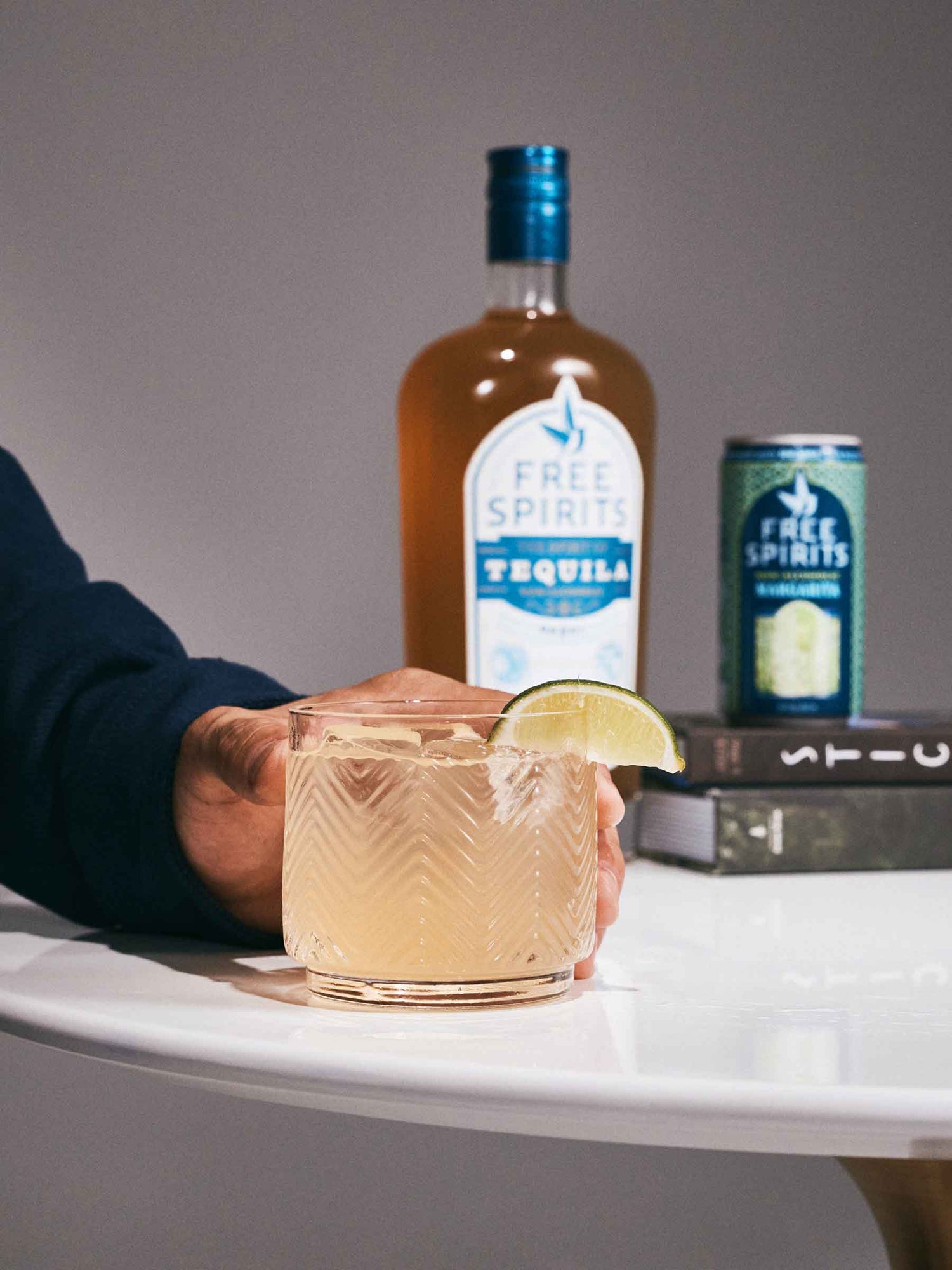
A masterclass in simplicity and refinement, the Tommy’s Margarita is the leaner, sharper evolution of the classic. By replacing orange liqueur with agave syrup, it shifts the focus squarely onto tequila and lime, letting clarity and balance do the work.

Built with The Spirit of Tequila, fresh lime juice, and agave, this non-alcoholic version keeps the drink bright, structured, and unmistakably Margarita in shape. It’s crisp, direct, and quietly assertive, proof that three ingredients, properly aligned, are more than enough.

star

Why This Works

The structure is tight and intentional. Lime provides brightness and tension, agave syrup rounds the acidity without masking it, and The Spirit of Tequila carries the drink with a clean agave backbone. Without orange liqueur in the mix, the flavors read clearer and more focused, making every element count.

About Free Spirits: The Spirit of Tequila

The Spirit of Tequila is made with real Blue Agave and modeled on the depth and balance of a Reposado. It shows warm oak and gentle vanilla with a clean pepper heat and subtle smokiness that work naturally in agave-based cocktails. In mixed drinks, it has the presence to hold up to citrus, the structure to balance sweetness, and the clarity to stay defined when combined with stronger flavors. It performs reliably in Margaritas, Palomas, Ranch Waters, and any build that expects an agave spirit with enough character to stay present.

The Tommy’s Margarita

The Tommy’s Margarita was developed in the early 1990s at Tommy’s Mexican Restaurant in San Francisco by Julio Bermejo. At the time, most Margaritas relied on orange liqueur for sweetness. Bermejo replaced it with agave syrup, a move that shifted the drink’s center of gravity back toward tequila itself.

The change was subtle but significant. By removing the citrus-driven sweetness of triple sec, the Tommy’s build sharpened the focus on agave and lime, creating a cleaner, more tequila-forward profile. What began as a house spec became a modern standard, embraced by bartenders who preferred clarity over ornament and structure over excess.

Zero-Proof Cocktail Basics

What is a zero-proof cocktail?

A zero-proof cocktail is a fully built drink that follows the same principles as any classic: acid, sweetness, aromatics, dilution, and a defined base spirit. The difference is the base is non-alcoholic. When that spirit has enough structure and character, like the ones we make, you get a cocktail that drinks like a cocktail, not a compromise.

How do non-alcoholic spirits work in classic cocktail recipes?

Non-alcoholic spirits step into the role of the base spirit. They carry citrus, sugar, bitters, and dilution the same way their alcoholic counterparts do. Some recipes need small ratio adjustments, but the technique stays the same: build the drink, balance the elements, and let the base spirit define the profile.

Do zero-proof cocktails taste like the originals?

They taste like cocktails: recognizable, structured, and intentional. The goal isn't imitation; it's integrity. When the build is balanced and the spirit has presence, you get the character of the drink without relying on alcohol to do the work.

Can zero-proof cocktails have real complexity?

Yes. Complexity comes from design, not ethanol. A well-built zero-proof cocktail shows layers: aromatics, texture, finish. The craft sits in the composition, not the ABV. The right non-alcoholic spirit brings the structure; the ingredients do the rest.

What is the difference between zero-proof and low-proof cocktails?

Zero-proof cocktails contain no alcohol. Low-proof cocktails blend traditional spirits with non-alcoholic spirits to dial down the ABV while keeping the drink's identity intact. It's the easiest way to keep the ritual, cut the intensity, and stay in full control of the experience.

Why does Free Spirits work so well in both zero-proof and low-proof cocktails?

The Spirit of Tequila is built with agave-forward aromatics and enough body to hold citrus and sweetness in balance. Whether you use it as the sole base or split it with traditional tequila, it behaves like a true cocktail foundation, keeping the drink bright, structured, and unmistakably itself.