

Pink Gin Punch

Pink Gin Punch

We’re raising a glass to the OG of cocktail culture: punch. Born in the 1700s, punch bowls were the original centerpiece of any great gathering—meant to be shared, passed around, and celebrated.

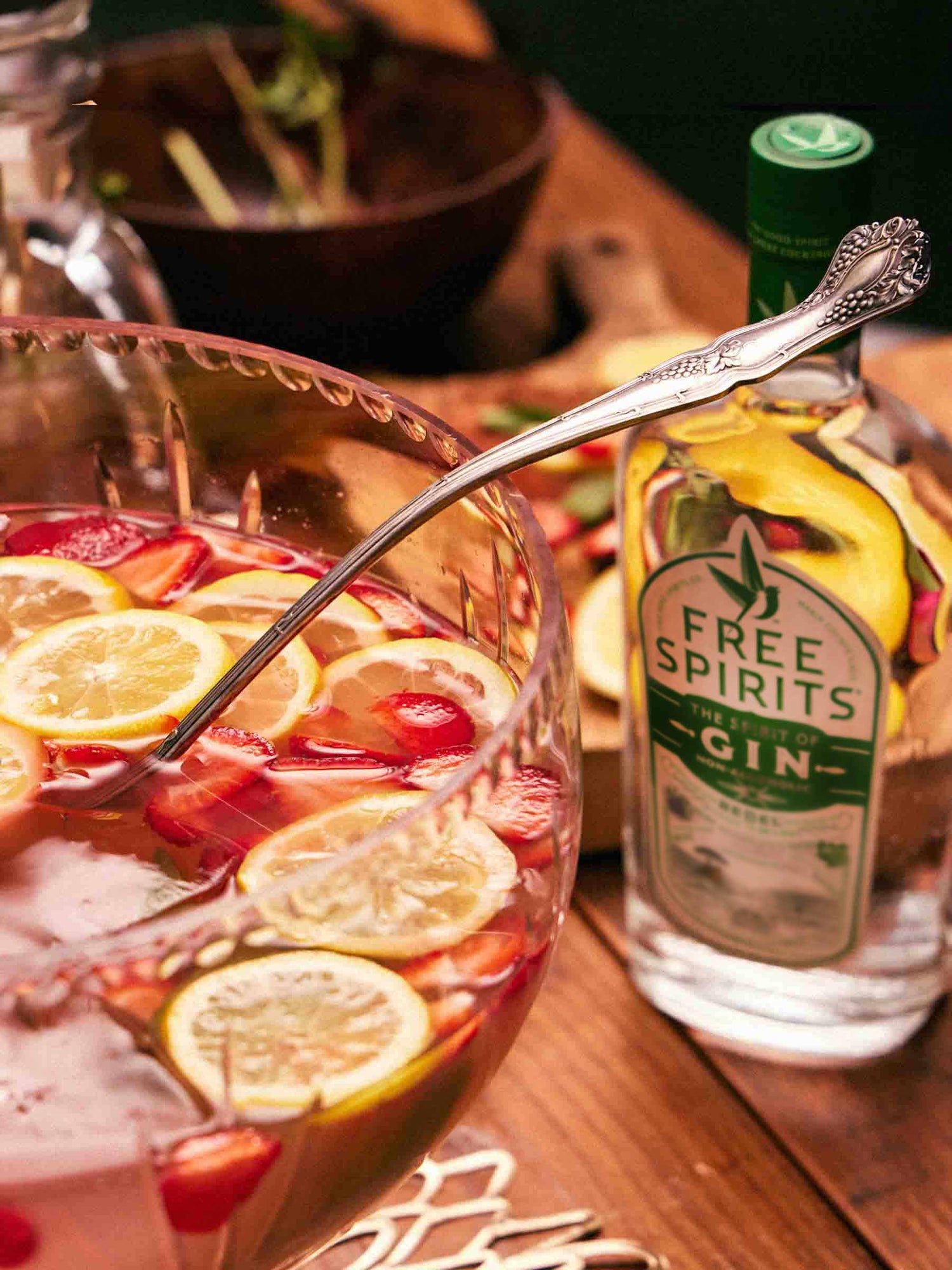
And while the ingredients have evolved, the ritual remains the same. Our Pink Gin Punch is a vibrant, non-alcoholic twist on a centuries-old tradition. Made with The Spirit of Gin and fresh strawberry lemonade, it’s light, bright, and designed for sharing—just as punch was always meant to be.

star

Why This Works

At its core, the drink follows the traditional punch structure of spirit, citrus, sweetener, and dilution.

The strawberry lemonade handles most of the balancing work, combining acidity and sweetness in a single ingredient, while The Spirit of Gin provides the botanical structure underneath. Mint and lemon add freshness and aroma, helping the punch stay lively rather than overly sweet.

Serving the drink over large-format ice is important here. Smaller cubes dilute too quickly, while larger pieces keep the punch cold and properly balanced as people return for another glass.

About Free Spirits: The Spirit of Gin

The Spirit of Gin is modeled on the softer, earthier profile of Plymouth gin, crafted with real juniper, coriander, and citrus botanicals to deliver balanced juniper, subtle spice, and gentle citrus without turning sharp or medicinal. It has the structure needed for gin cocktails: body to carry tonic and vermouth, smoothness for spirit-forward builds, and brightness to lift citrus in Gimlets and Tom Collins variations. It holds shape and provides backbone alongside bold ingredients like elderflower, cucumber, or aromatic bitters. Performs reliably in Martinis, Negronis, Gin & Tonics, and any cocktail that expects gin with definition and restraint.

The Original Social Cocktail

Punch predates most modern cocktails by centuries. Originating through trade routes connecting Europe, India, and the Caribbean, early punch recipes were built around a simple formula of spirit, citrus, sugar, water, and spice. By the 1700s, punch bowls had become fixtures of parties, taverns, and large social gatherings, valued as much for the ritual of sharing as for the drink itself.

That communal format still defines punch today. Unlike individual cocktails built to order, punch is designed to evolve as it sits, with citrus, dilution, and aromatics slowly opening up over time. Modern versions often lean lighter and brighter than their historical counterparts, but the underlying idea remains unchanged: make enough for everyone and keep the bowl within reach.

Zero-Proof Cocktail Basics

What is a zero-proof cocktail?

A zero-proof cocktail is a fully built drink that follows the same principles as any classic: acid, sweetness, aromatics, dilution, and a defined base spirit. The difference is the base is non-alcoholic. When that spirit has enough structure and character, like the ones we make, you get a cocktail that drinks like a cocktail, not a compromise.

How do non-alcoholic spirits work in classic cocktail recipes?

Non-alcoholic spirits step into the role of the base spirit. They carry citrus, sugar, bitters, and dilution the same way their alcoholic counterparts do. Some recipes need small ratio adjustments, but the technique stays the same: build the drink, balance the elements, and let the base spirit define the profile.

Do zero-proof cocktails taste like the originals?

They taste like cocktails: recognizable, structured, and intentional. The goal isn't imitation; it's integrity. When the build is balanced and the spirit has presence, you get the character of the drink without relying on alcohol to do the work.

Can zero-proof cocktails have real complexity?

Yes. Complexity comes from design, not ethanol. A well-built zero-proof cocktail shows layers: aromatics, texture, finish. The craft sits in the composition, not the ABV. The right non-alcoholic spirit brings the structure; the ingredients do the rest.

What is the difference between zero-proof and low-proof cocktails?

Zero-proof cocktails contain no alcohol. Low-proof cocktails blend traditional spirits with non-alcoholic spirits to dial down the ABV while keeping the drink's identity intact. It's the easiest way to keep the ritual, cut the intensity, and stay in full control of the experience.

Why does Free Spirits work so well in both zero-proof and low-proof cocktails?

The Spirit of Gin is built with botanical complexity and enough body to hold vermouth and citrus in balance. Whether you use it as the sole base or split it with traditional gin, it behaves like a true cocktail foundation, keeping the drink crisp, layered, and recognizable.