

The Cosmo made non-alcoholic with The Spirit of Gin

The Cosmo

The Cosmopolitan is famous for its cranberry-red color and sharp citrus character, but there's more to a good Cosmo than its appearance. The balance of tart fruit, orange, and spirit is what makes the drink worth revisiting.

Our non-alcoholic Cosmo puts The Spirit of Gin in place of the traditional vodka, bringing juniper and botanicals into the mix. Fresh lime and unsweetened cranberry provide a bright, tart foundation, while orange-scented simple syrup adds sweetness and a fragrant citrus note. Shaken cold and served in a coupe, it's crisp, botanical, and unmistakably a Cosmo.

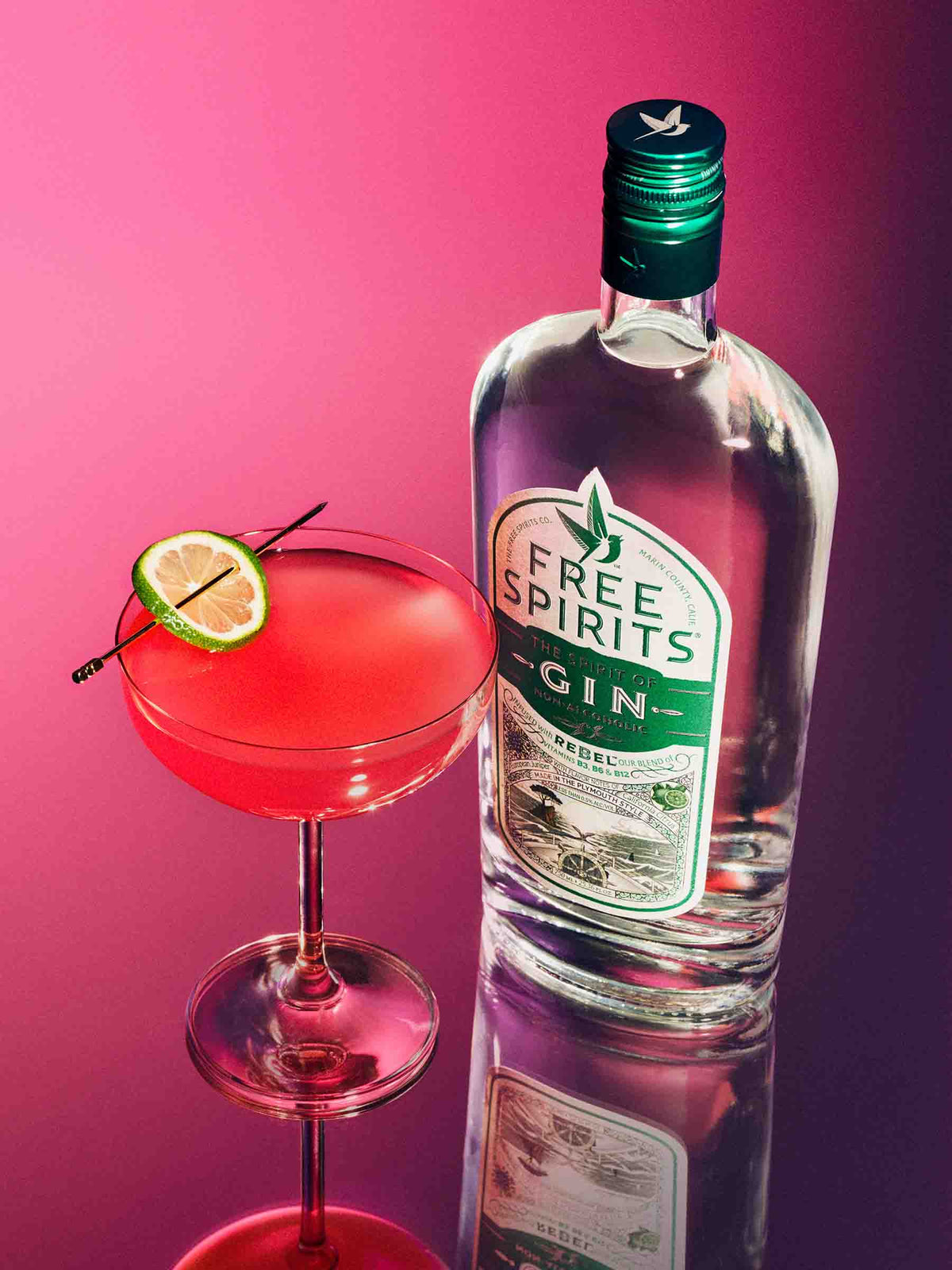
The Cosmo (Non‑Alcoholic)

The Free Spirits Innovation Lab
Category

Non‑Alcoholic Cocktails

The Cosmopolitan is famous for its cranberry-red color and sharp citrus character, but there's more to a good Cosmo than its appearance. The balance of tart fruit, orange, and spirit is what makes the drink worth revisiting.

Our non-alcoholic Cosmo puts The Spirit of Gin in place of the traditional vodka, bringing juniper and botanicals into the mix. Fresh lime and unsweetened cranberry provide a bright, tart foundation, while orange-scented simple syrup adds sweetness and a fragrant citrus note. Shaken cold and served in a coupe, it's crisp, botanical, and unmistakably a Cosmo.

Ingredients

  • 2½ oz The Spirit of Gin
  • ¾ oz orange-scented simple syrup*
  • ½ oz fresh lime juice
  • ½ oz 100% cranberry juice

Method

  1. Add The Spirit of Gin, orange-scented simple syrup, lime juice, and cranberry juice to a cocktail shaker filled with ice.
  2. Shake until well chilled.
  3. Strain into a coupe glass.
  4. Garnish with a fresh lime wheel.

Why This Works

The Spirit of Gin provides a botanical foundation, with juniper and citrus notes that work naturally alongside fresh lime and orange. Its aromatic character gives the cocktail more definition than a neutral base would.

The orange-scented simple syrup does two jobs. It supplies the sweetness needed to balance the lime and cranberry, while the expressed orange oils provide the citrus aroma traditionally associated with the Cosmopolitan's orange liqueur.

Using 100% cranberry juice rather than sweetened cranberry juice cocktail is an important distinction. The cranberry contributes pronounced tartness, tannin, and color, while the syrup provides a separately measured source of sweetness. This keeps the fruit character distinct and allows the gin's botanicals to remain present through the finish.

The Cosmo made non-alcoholic with The Spirit of Gin

About Free Spirits

The Spirit of Gin

The Spirit of Gin is modeled on the softer, earthier profile of Plymouth gin, crafted with real juniper, coriander, and citrus botanicals to deliver balanced juniper, subtle spice, and gentle citrus without turning sharp or medicinal. It has the structure needed for gin cocktails: body to carry tonic and vermouth, smoothness for spirit-forward builds, and brightness to lift citrus in Gimlets and Tom Collins variations.

It holds shape and provides backbone alongside bold ingredients like elderflower, cucumber, or aromatic bitters. Performs reliably in Martinis, Negronis, Gin & Tonics, and any cocktail that expects gin with definition and restraint.

Before the Cosmo Was Pink

The Cosmopolitan became a fixture of cocktail culture in the late 1980s and 1990s, particularly through New York's bar scene. Its precise origins remain disputed, but Toby Cecchini's version at The Odeon in 1988 helped establish the familiar combination of citrus vodka, orange liqueur, lime, and cranberry. Its appearances on Sex and the City later made it one of the most recognizable cocktails in the world.

Interestingly, an earlier cocktail called the Cosmopolitan appeared in the 1934 book Pioneers of Mixing at Elite Bars. That recipe used gin, Cointreau, lemon, and raspberry syrup. It wasn't the cranberry Cosmo we know today, nor is there a documented direct connection between the two, but it gives our gin-based version an intriguing historical counterpart.

The Cosmo has changed considerably over the years. Ours keeps the modern cocktail's cranberry-and-citrus identity while giving gin a place at the center.

Zero-Proof Cocktail Basics

What is a zero-proof cocktail?

A zero-proof cocktail is a fully built drink that follows the same principles as any classic: acid, sweetness, aromatics, dilution, and a defined base spirit. The difference is the base is non-alcoholic. When that spirit has enough structure and character, like the ones we make, you get a cocktail that drinks like a cocktail, not a compromise.

How do non-alcoholic spirits work in classic cocktail recipes?

Non-alcoholic spirits step into the role of the base spirit. They carry citrus, sugar, bitters, and dilution the same way their alcoholic counterparts do. Some recipes need small ratio adjustments, but the technique stays the same: build the drink, balance the elements, and let the base spirit define the profile.

Do zero-proof cocktails taste like the originals?

They taste like cocktails: recognizable, structured, and intentional. The goal isn't imitation; it's integrity. When the build is balanced and the spirit has presence, you get the character of the drink without relying on alcohol to do the work.

Can zero-proof cocktails have real complexity?

Yes. Complexity comes from design, not ethanol. A well-built zero-proof cocktail shows layers: aromatics, texture, finish. The craft sits in the composition, not the ABV. The right non-alcoholic spirit brings the structure; the ingredients do the rest.

What is the difference between zero-proof and low-proof cocktails?

Zero-proof cocktails contain no alcohol. Low-proof cocktails blend traditional spirits with non-alcoholic spirits to dial down the ABV while keeping the drink's identity intact. It's the easiest way to keep the ritual, cut the intensity, and stay in full control of the experience.

Why does Free Spirits work so well in both zero-proof and low-proof cocktails?

The Spirit of Gin is built with botanical complexity and enough body to hold vermouth and citrus in balance. Whether you use it as the sole base or split it with traditional gin, it behaves like a true cocktail foundation, keeping the drink crisp, layered, and recognizable.